Translate

Saturday, 12 December 2015

Fire destroys 23-door longhouse in Tutus

SIBU: Residents in a 23-door longhouse in Tutus, Batang Igan about 60 kilometres from here became homeless when fire gutted their homes at about 7.30 pm yesterday.
In the incident, the Rumah Ruwinda, home to its 93 residents, was totally burnt down but there was no loss of life.
According to Sibu Zone Fire and Rescue Department senior enforcement officer, Mutalib Rashid, said the department received a call at 7.37 pm and mobilised 10 men and vehicles from the Sungai Merah Station to provide assistance.
Another vehicle with four crew from the Sibu Fire and Rescue Department Station was also sent to the location.
Mutalib said the cause of the fire and loss incurred was still being investigated.
Meanwhile, a spokesman for the Sibu Welfare Services Department, Ali Taha Ayang said essential items, clothes, foods and drink, worth more than RM10,000, were distributed to the victims today.


Read more: http://www.theborneopost.com/2015/12/11/fire-destroys-23-door-longhouse-in-tutus

Donald trump success story

Donald Trump is an American business magnate, television and radio personality, and author. He is the Chairman and CEO of the Trump Organization, a US-based real-estate developer. Trump is also the founder of Trump Entertainment Resorts, which operates numerous casinos and hotels across the world. Trump's extravagant lifestyle and outspoken manner have made him a celebrity for years, a status which was only amplified by the success of his NBC reality show, The Apprentice (of which he serves as host and executive producer). He is the son of Fred Trump who was a wealthy real estate developer based in New York City.

Source: Wikipedia

Donald Trump
Donald August 19 (cropped).jpg
Trump at a town hall in New Hampshire, August 2015
Born

Donald John Trump

June 14, 1946 (age 69)
Queens, New York City, United States
Residence


Alma mater
Occupation
Years active
1968–present
Salary
Increase $250 million
Net worth
Increase $4.5 billion (Forbes October 2015)
Political party

Republican (2012–present; 2009–11; 1987–99)

Previous affiliations:
Independent (2011–12)
Democratic (2001–09; before 1987)
Reform (1999–2001)
Religion
Spouse(s)
Children


Parent(s)

Business career

Trump began his career at his father's real estate company, Elizabeth Trump and Son, which focused on middle-class rental housing in the New York City boroughs of Brooklyn, Queens, and Staten Island. One of Trump's first projects, while he was still in college, was the revitalization of the foreclosed Swifton Village apartment complex in Cincinnati, Ohio, which his father had purchased for $5.7 million in 1962. The Trumps became involved in the project and, with a $500,000 investment, turned the 1,200-unit complex's occupancy rate from 34% to 100%. In 1972, the Trump Organization sold Swifton Village for $6.75 million.
In 1971, Trump moved to Manhattan, becoming involved in larger building projects, and used attractive architectural design to win public recognition. Trump initially came to public attention in 1973 when he was accused by the Justice Department of violations of the Fair Housing Act in the operation of 39 buildings. Trump in turn accused the Justice Department of targeting his company because it was a large one, and in order to force it to rent to welfare recipients. Trump settled the charges in 1975, saying he was satisfied that the agreement did not "compel the Trump organization to accept persons on welfare as tenants unless as qualified as any other tenant."
Trump made plans to acquire and develop the old Penn Central for $60 million with no money down. Later, with the help of a 40-year tax abatement from the New York City government, he turned the bankruptCommodore Hotel into the Grand Hyatt and created The Trump Organization.
New York City had a plan to build the Javits Convention Center on property for which Trump held a right-to-buy option. Trump estimated his company could have completed the project for $110 million, but the city rejected his offer and Trump received a broker's fee on the sale of the property instead. Repairs on The Wollman Rink in Central Park (built in 1955) were started in 1980 with an expected 2½-year construction schedule but were nowhere near completion by 1986. Trump took over the management of the project, at no cost to the city, and completed it in three months for $1.95 million, which was $750,000 less than the initial budget.
In 1988, Trump acquired the Taj Mahal Casino in a transaction with Merv Griffin and Resorts International, which led to mounting debt, and by 1989, Trump was unable to meet loan payments. Although he shored up his businesses with additional loans and postponed interest payments, by 1991 increasing debt brought Trump to business bankruptcy. Banks and bondholders had lost hundreds of millions of dollars but opted to restructure the debt. The Taj Mahal emerged from bankruptcy on October 5, 1991, with Trump ceding 50 percent ownership in the casino to the original bondholders in exchange for lowered interest rates on the debt and more time to pay it off. He also sold his financially challenged Trump Shuttle airline and his 282-foot megayacht, the Trump Princess. The late 1990s saw a resurgence in Trump's financial situation. The will of Trump's father, who died in 1999, divided an estate estimated at $250–300 million equally among his four surviving children.
In 2001, Donald Trump completed Trump World Tower, a 72-story residential tower across from the United Nations Headquarters. Also, he began construction on Trump Place, a multi-building development along theHudson River. Trump owns commercial space in Trump International Hotel and Tower, a 44-story mixed-use (hotel and condominium) tower on Columbus Circle. Trump owns several million square feet of prime Manhattan real estate.
Without personal capital investment,[citation needed] Trump has licensed his name and image for the development of many real estate projects, including Trump International Hotel and Tower – Honolulu, Trump International Hotel and Tower – Chicago, Trump International Hotel and Tower – Toronto, and Trump Tower – Tampa.[citation needed] At least two Trump-branded real estate projects have gone into foreclosure. The Turkish owner of Trump Towers Istanbul, who pays Trump for the use of his name, was reported in December 2015 to be exploring legal means to dissociate the property after the candidate's call to bar Muslims from entering the United States.
In 2015, Forbes estimated his net worth at $4 billion. In June 2015, Business Insider published a June 30, 2014, financial statement supplied by Trump. The statement reflects his net worth as $8.7 billion. Of that amount, $3.3 billion is represented by "Real Estate Licensing Deals, Brand and Branded Developments", described by Business Insider as "basically [implying] that Trump values his character at $3.3 billion."


Reason expensive Rolex watches

Original Rolex watches use Swiss clockwork, whose quality is beyond reproach, plus the casings were deliberately made luxurious as well as resistant, so as to make the result even more of an expensive luxury item. Add to it that they were great innovators in the watchmaking industry, creating such gadgets as the self winding watch or the waterproof watch, and you can see how they got quite a reputation 

Some rich people with influence over fashion adopted them, which made them highly sought after, and even more expensive... and now they are a century old standard of luxury watchmaking in a world where there are more snobbish people with too much money than ever before, and you've got the stage set for luxury stuff that's priced outrageously and still successful.

Source: Wikipedia

reason expensive Rolex watches

History
Alfred Davis and his brother-in-law Hans Wilsdorf founded Wilsdorf and Davis, the company that would eventually become Rolex SA, in London, England in 1905. Wilsdorf and Davis' main commercial activity at the time involved importing Hermann Aegler's Swiss movements to England and placing them in high-quality watch cases made by Dennison and others. These early wristwatches were sold to jewellers, who then put their own names on the dial. The earliest watches from Wilsdorf and Davis were usually hallmarked "W&D" inside the caseback.In 1908 Wilsdorf registered the trademark "Rolex" and opened an office in La Chaux-de-Fonds, Switzerland. The company name "Rolex" was registered on 15 November 1915. The book The Best of Time: Rolex Wristwatches: An Unauthorized History by Jeffrey P. Hess and James Dowling says that the name was just made up. One story, never confirmed by Wilsdorf, recounts that the name came from the French phrasehorlogerie exquise, meaning "exquisite clockwork" or as a contraction of "horological excellence". Wilsdorf was said to want his watch brand's name to be easily pronounceable in any language. He also thought that the name "Rolex" was onomatopoeic, sounding like a watch being wound. It is easily pronounceable in many languages and, as all its upper-case letters have the same size, can be written symmetrically. It was also short enough to fit on the face of a watch.InnovationsAmong the company's innovations are:
  • The first waterproof wristwatch "Oyster", 1926
  • The first wristwatch with an automatically changing date on the dial (Rolex Datejust ref.4467, 1945)
  • The first wristwatch to show two time zones at once (Rolex GMT Master ref.6542, 1954)
  • The first wristwatch with an automatically changing day and date on the dial (Rolex Day-Date, 1956)
  • The first watchmaker to earn chronometer certification for a wristwatch (1910) [7]
Automatic movementsThe first self-winding Rolex wristwatch was offered to the public in 1931 (so-called the "bubbleback" due to the large caseback), preceded to the market by Harwood which patented the design in 1923 and produced the first self-winding watch in 1928, powered by an internal mechanism that used the movement of the wearer's arm. This not only made watch-winding unnecessary, but kept the power from the mainspring more consistent resulting in more reliable time keeping.Quartz movementsRolex participated in the development of the original quartz watch movements. Although Rolex has made very few quartz models for its Oyster line, the company's engineers were instrumental in design and implementation of the technology during the late 1960s and early 1970s. In 1968, Rolex collaborated with a consortium of 16 Swiss watch manufacturers to develop the Beta 21 quartz movement used in their Rolex Quartz Date 5100. alongside other manufactures including the Omega Electroquartz watches. Within about five years of research, design, and development, Rolex created the "clean-slate" 5035/5055 movement that would eventually power the Rolex Oysterquartz.Water-resistant casesRolex was also the first watch company to create a water resistant wristwatch that could withstand pressure to a depth of 100 m (330 ft). Wilsdorf even had a specially made Rolex watch (the watch was called the "DeepSea") attached to the side of Trieste, which went to the bottom of the Mariana Trench. The watch survived and tested as having kept perfect time during its descent and ascent. This was confirmed by a telegram sent to Rolex the following day saying "Am happy to confirm that even at 11,000 metres your watch is as precise as on the surface. Best regards, Jacques Piccard".CollectionsRolex produced specific models suitable for the extremes of deep-sea diving, caving, mountain climbing, polar exploration, and aviation. Early sports models included the Rolex Submariner (1953) and the Rolex Oyster Perpetual Date Sea Dweller. The latter watch has a helium release valve, co-invented with Swiss watchmaker Doxa, to release helium gas build-up during decompression. The Explorer (1953) and Explorer II (1971) were developed specifically for explorers who would navigate rough terrain, such as the world famous Mount Everest expeditions. Another iconic model is the Rolex GMT Master (1954), originally developed at the request of Pan Am Airways to provide its crews with a dual time watch that could be used to display GMT (Greenwich Mean Time), which is the international time standard for aviation and was needed for Astronavigation during longer flights.Certified chronometersRolex is the largest manufacturer of Swiss made certified chronometers. In 2005, more than half the annual production of COSC certified watches were Rolexes. To date, Rolex still holds the record for the most certified chronometer movements in the category of wristwatches.Ceramic bezelsPriceIn fact n the UK, the retail price for the stainless steel 'Pilots' range (such as the GMT Master II) starts from GBP £5,600. Diamond inlay watches are more expensive. The book "Vintage Wristwatches" by Antiques Roadshow's Reyne Haines listed a price estimate of Rolex watches that ranged between $650 and $75,000, while listing Tudors between $250 and $9,000. The most expensive Rolex ever produced by the Rolex factory was the GMT Ice reference 116769TBR with a retail price of $485,350. A Forbes magazine article on the Swiss watch industry compared the retail value of Rolexes to that of competing brands Corum, Universal Genève and IWC.


In 1914 Kew Observatory awarded a Rolex watch a Class A precision certificate, a distinction normally granted exclusively to marine chronometers.
In 1919 Wilsdorf left England due to wartime taxes levied on luxury imports as well as to export duties on the silver and gold used for the watch cases driving costs too high and moved the company to Geneva, Switzerland, where it was established as the Rolex Watch Company. Its name was later changed to Montres Rolex, SA and finally Rolex, SA. Upon the death of his wife in 1944, Wilsdorf established the Hans Wilsdorf Foundation in which he left all of his Rolex shares, making sure that some of the company's income would go to charity. As of 2006 a private trust owned the company, with no shares traded on any stock exchange.
In December 2008, following the abrupt departure of Chief Executive Patrick Heiniger for "personal reasons", the company denied that it had lost 1 billion Swiss francs (approx £574 million, $900 million) invested with Bernard Madoff, the American asset manager who pleaded guilty to an approximately £30 billion worldwide Ponzi scheme fraud. Rolex SA announced Heiniger's death on 5 March 2013.
As of 2010 Rolex watches continue to have a reputation as status symbols.


The company is now starting to introduce ceramic bezels across the range of professional sports watches. They are available on the Submariner, Sea Dweller-Deepsea, GMT Master II and Daytona models. The ceramic bezel is not influenced by UV-light and is very scratch resistant.


Tuesday, 8 December 2015

Study: Too much TV as a young adult may harm brain in mid-life

Too much TV as a young adult may harm brain in mid-life

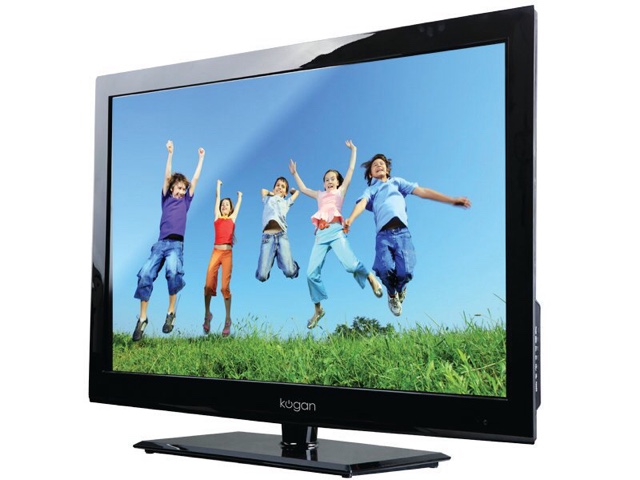
Nowadays, television has become a necessity. In addition to access a variety of information, television is also used as a means of entertainment or relieve fatigue of everyday routine. However, watching television can have a negative impact on health if done for too long.

Study: Too much TV as a young adult may harm brain in mid-life


Too much television-watching in young adulthood could lead to cognitive problems in mid-life, suggested a study Wednesday that tracked more than 3,000 people for 25 years.

People who reported watching more than three hours of television per day as young adults were twice as likely to suffer from poor cognition down the road, compared to those who were more active and reported less screen time.

The research tracked 3,247 adults, aged 18-30 when they enrolled in the study published in the Journal of the American Medical Association (JAMA) Psychiatry.

Scientists assessed cognitive function in the 25th year using three tests of mental processing speed, executive function and verbal memory.

Low levels of physical activity and lots of television-watching were linked to slower processing speed and worse executive function, the study found.

“Participants with the least active patterns of behavior (i.e., both low physical activity and high television viewing time) were the most likely to have poor cognitive function,” said the study.

Verbal memory, however, did not appear to be affected by the amount of television time.

The study was led by Tina Hoang of the Northern California Institute for Research and Education at the Veterans Affairs Medical Center, San Francisco; and Kristine Yaffe of the University of California, San Francisco.

According to Andrew Przybylski, an experimental psychologist at the University of Oxford, who was not involved in the findings, the study contained shortcomings.

“First, these data rely entirely on a potentially problematic self-reported measure for television time,” he said in a statement.

Researchers also did not study participants’ cognitive function at the beginning of the study, in order to have a baseline for a comparison.

He also pointed out that “nearly one in three participants did not complete the study,” further weakening the strength of the findings.

“Taken together, the work should provoke continued conversation about the nature of different forms of interactive media and underline the value of open science methodology including open datasets, pre-registered analysis plans, and robust and open peer review process,” he said in a statement.

“Until these innovations are introduced into this research literature, we will be left scratching our heads at studies like this.” 


Sunday, 6 December 2015

I want to become fit and healthy

 Jogging is an excellent exercise because it let you lose weight
evenly throughout your whole body. If you want to lose weight in
specific areas, you should target them with exercises. If they are
your problem areas, they will be very difficult to tone. 


I want to become fit and healthy


You will have to work double on them. The best approach is this:
1. Lower/control your daily calorie intake (control for normal
weight, lower for overweight).
2. Run/jog to lower your overall body fat percentage.
3. Target your problem areas with exercises.
an excellent exercise, you can do it in front of your TV: sit on a
stool, and put your toes under something (piece of heavy furniture,
for example). In your hands hold a little dumbbell. Please, make sure
that it is not very heavy, start with one kilo, for example, or you
will damage your back and spine! Slowly move the upper part of your
body back, until it's parallel with the ground. Stop for a second and
move it back to the sitting position. Repeat ten times. Every week add
to the number of repetitions. You will see the results in a week,
guaranteed! You will see or feel under the fat - if you have any - six
pack and muscles. Dumbbells do wonders. Much better than these
crunches - I came up to three hundreds and there was no results AT
ALL. With the dumbbells you will see it in a week.
Side Lunge Slide
Stand with feet hip-width apart, left foot resting on a paper plate.
Bend the right leg while sliding the left foot to the side, torso
upright and abs in. Slowly slide left foot back to starting position,
repeating 8-12 times. Switch legs and repeat for 2-3 sets.

Lunge Slide
Stand with feet hip-width apart, left foot resting on a paper plate.
Bend the right leg while sliding the left foot back into a lunge
position, keeping the right knee behind the toe, torso upright and abs
in. Slowly slide left foot back to starting position and repeat 8-12
times. Switch legs and repeat on each leg for 2-3 sets.

Front One-Legged Squat
Stand on a step or small platform. Lift left leg out in front of step
and bend the right leg, bringing the toe of the left foot to the
floor. Touch the floor lightly and keep the knee of the bent leg in
line with toes. Straighten the right leg and repeat 8-12 times. Switch
legs and repeat for 2-3 sets.

Chair Squat
Stand in front of a chair with feet hip-width apart, abs in and torso
straight. Slowly bend your knees and lower and until you're almost
touching your butt to the chair. Hold for 2-3 seconds, knees behind
the toes, and straighten. Repeat for 12-16 reps, 2-3 sets.

Heel Drops with Leg Extension
Stand on step or platform with left leg on the step, right leg
hanging off the side. Bend the left leg and lower the right foot
towards the floor (a few inches). Straighten the left leg and bring
the right leg out to the side, foot flexed, in a leg extension. Repeat
8-12 times, switch legs for 2-3 sets.

Hip Extension
On a flat or inclined step or platform, lie facedown with hips on the
edge of the step, legs straight out behind you with toes resting
lightly on the floor. Squeeze the glutes and hamstrings and straighten
the legs until they are level with the hips. Hold for 2-3 seconds, and
lower letting toes lightly touch the floor. Repeat for 2-3 sets of
8-12.


Eat more fruits and vegetables,drink plenty of water, reduce eating carbohydrates and sugary drinks such as soda. Try to eat more chicken rather than meat. 
Make sure you set a realistic goal. Exercise more often switching it up between running, elliptical, bicycle, jump rope, dead lifts, squats. You're 13 so maybe join the track team or cross country in your school.